
opinion
Don't Just Keep Children Away From Technology. Teach Them How to Use It.
AI, smartphones aur social media se bachchon ko protect karna zaroori hai. Lekin sirf unhe door rakhna enough nahi hai. A safer path is guided, age-appropriate access that gradually builds judgement, responsibility and independence.
Saumya Singh · 23 September 2026 · 6 min read
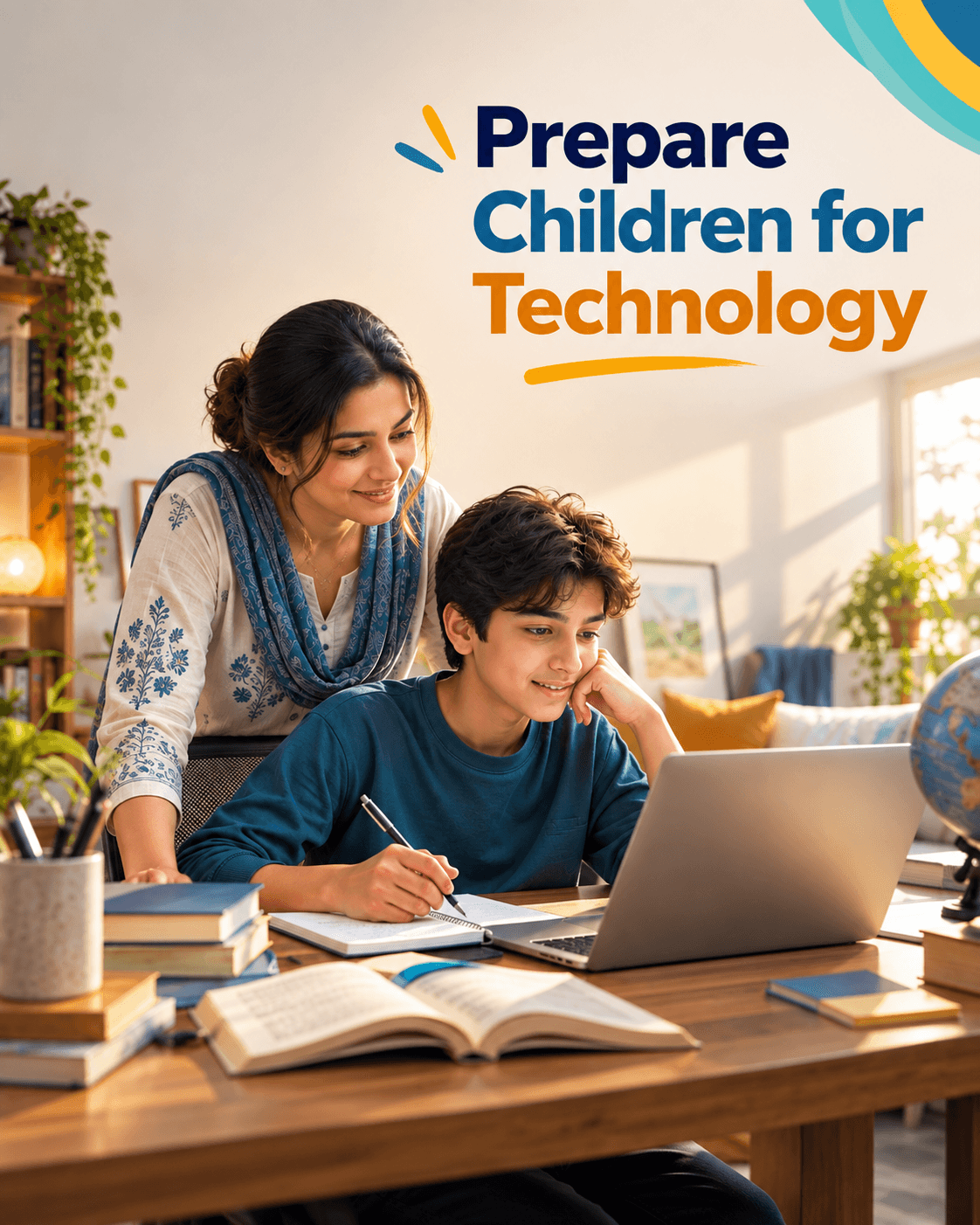
Ek thought experiment se shuru karte hain.
Hum generally bachchon ko politics ki complexity se door rakhte hain. Phir 18 saal ki age aate hi hum expect karte hain ki woh ek responsible citizen bane, apne vote ki value samjhe, candidates ko evaluate kare aur informed decision le.
Par judgement suddenly 18th birthday par download nahi hota.
Usse develop karna padta hai.
Technology ke saath bhi hum kahin wahi mistake toh nahi kar rahe?
AI, smartphones aur social media se bachchon ko protect karne ki concern bilkul genuine hai. Internet par misinformation hai, privacy risks hain, inappropriate content hai, online pressure hai, attention traps hain, aur AI confidently wrong information bhi generate kar sakta hai.
Boundaries ki zaroorat hai.
Lekin ek doosra question bhi poochna zaroori hai:
“Kya sirf door rakhna unhe us duniya ke liye prepare kar raha hai jisme eventually unhe jeena aur kaam karna hai?”
PROTECTION AUR PREPARATION SAME CHEEZ NAHI HAIN
Aaj ke bachche ek aisi duniya mein grow kar rahe hain jahan technology sirf entertainment nahi hai.
Research, communication, design, coding, creativity, collaboration, entrepreneurship, higher education aur careers — almost har direction mein digital capability increasingly relevant hai.
Toh question sirf itna nahi ho sakta: Technology allow karni hai ya ban?
Better questions hain:
Kis age mein? Kis purpose ke liye? Kitni freedom ke saath? Aur kis guidance ke under?
Unrestricted access answer nahi hai.
Lekin permanent avoidance bhi preparation nahi hai.
Agar hum sirf barriers create karenge, without gradually developing judgement, toh ek din barriers hatne ke baad child ke paas access toh hoga — lekin zaroori nahi ki uske paas us access ko handle karne ki understanding bhi ho.
“Protection aur preparation ko ek doosre ka opposite nahi hona chahiye. Good protection should gradually lead to preparation.”
AGAR HUM SAFE PATH NAHI DIKHAYENGE
Curiosity ko permanently lock karna difficult hai.
Jab kisi child ko repeatedly sirf “No” milta hai, lekin uske friends, school environment aur surrounding world mein wahi technology visible hai, toh woh usse independently explore karne ki koshish kar sakta hai.
Aur yahin guidance important ho jaati hai.
Imagine kijiye: ek student research ke liye internet access karna chahta hai.
Clear direction nahi hai. Safe starting point nahi hai. Koi guide nahi kar raha ki useful information kahan milegi, kya trustworthy hai aur kis cheez se bachna hai.
Research ke liye device khola tha.
Kuch clicks baad recommendations.
Phir short videos.
Phir trends.
Phir endless scrolling.
Technology available thi. Direction nahi thi.
Digital environments attention capture karne mein extremely effective ho sakte hain, aur young users abhi judgement aur self-regulation develop kar rahe hote hain.
Ab imagine kijiye wahi curiosity ek guided environment mein enter kare, jahan child gradually seekhe:
Search kaise karna hai. Source kaise verify karna hai. Personal information kya share nahi karni hai. AI ka answer kab question karna hai. Screen se kab break lena hai. Aur kab technology ko side mein rakh dena hai.
“Dono situations mein screen hai. Dono mein internet hai. Lekin learning experience bilkul different hai.”

TECHNOLOGY SIRF CONSUMPTION NAHI HAI
Imagine a child entering the digital world.
Usse kya dikhta hai?
Trending reels. Influencers. Selfies. Challenges. Viral content. Likes. Followers.
Entertainment mein inherently kuch wrong nahi hai. Problem tab hai jab digital world ka sirf yahi version visible ho.
Because the same device can open another world too.
A child can explore space.
Geography ko interactive maps se understand kar sakta hai.
Animation seekh sakta hai.
Basic coding explore kar sakta hai.
Ek presentation create kar sakta hai.
Story likh sakta hai.
Music experiment kar sakta hai.
Different careers discover kar sakta hai.
Koi small project build kar sakta hai.
AI se difficult concept ko simpler language mein samajhne ki koshish kar sakta hai.
Technology sirf consume karne ki jagah nahi hai.
It can also be a place to learn, create, question and solve.
Maybe children's first meaningful experience with technology should not only be about consuming what somebody else created. Maybe we should also show them how to create something of their own.
“Before teaching a child how to build an audience, teach them how to build something worth sharing.”
AI ko ban karna nahi, AI ko samajhna zaroori hai
AI ko completely ignore karna increasingly difficult hoga.
But giving a child unrestricted access to every AI tool is not responsible either.
There is a middle path: progressive, age-appropriate access.
First, understand.
Then explore with guidance.
Then use with boundaries.
Then create.
And gradually earn greater independence.
A younger child might explore an AI-assisted activity with an adult sitting beside them.
An older student might learn how to compare an AI answer with reliable sources.
Another might learn that personal information should not simply be entered into an AI system.
Eventually students ko kuch aur important questions samajhne honge:
AI kab useful hai?
AI kab wrong ho sakta hai?
Kya verify karna hai?
Kya private rakhna hai?
Kab khud struggle karke problem solve karna better hai?
Aur kab AI ko use hi nahi karna hai?
“The goal should not be a child who can prompt AI for every answer. The goal should be a child who has enough judgement to decide whether AI belongs in the task at all.”
That is a much deeper form of AI literacy.
CONTROL SE JUDGEMENT TAK
A six-year-old, a twelve-year-old aur a seventeen-year-old obviously same level of digital freedom ke liye ready nahi hote.
Age matters.
Maturity matters.
Purpose matters.
The individual child matters.
Early stages mein boundaries stronger ho sakti hain.
Then comes supervised exploration.
Then responsibility.
Then greater autonomy.
Parents aur teachers har click permanently monitor nahi kar sakte.
Aur ideally, permanent monitoring goal hona bhi nahi chahiye.
Restriction ka purpose sirf control maintain karna nahi hona chahiye.
It should eventually help build self-control.
Isi journey mein hum technology ka meaning bhi change kar sakte hain:
Creation before validation. Curiosity before virality. Skill before followers. Learning before attention.
A child who learns to associate technology with asking questions, building projects, solving problems and creating ideas enters the digital world with a very different starting point.
“Guidance ka best outcome obedience nahi hai. It is judgement.”

THE GOAL IS INDEPENDENCE
The safer path is not necessarily the path with zero technology.
Safety matters.
Age limits matter.
Privacy matters.
Parental controls matter.
Healthy screen limits matter.
Human relationships, outdoor play, books, conversations aur offline childhood matter enormously.
Guided access should never become an excuse for unlimited screen time.
But safety also includes preparation.
Because eventually the parental control comes off.
The school filter disappears.
The child grows up.
And then the real protection is no longer the password we kept from them.
“It is the judgement we helped them build.”
We cannot hold a child's hand through every search, every prompt, every video and every digital decision.
Nor should that be the final goal.
Give children boundaries.
Give them age-appropriate access.
Give them safe spaces to explore.
Teach them to question.
Teach them to verify.
Teach them privacy.
Teach them when to log off.
And show them that technology can be used to build something — not merely watch what everybody else is building.
“The purpose of guidance is to gradually make constant guidance unnecessary.”
Don't simply prepare technology for children.
“Prepare children for technology.”
EDITORIAL NOTE
This is an opinion article by Saumya Singh and reflects the author's educational perspective. It is intended to encourage discussion, not to recommend unrestricted technology, AI or social-media access for children.
Digital access should be age-appropriate and should consider a child's maturity, privacy, safety, wellbeing, applicable platform age requirements, and family or school context.
REFERENCES
[1] UNESCO. AI Competency Framework for Students. 2024.
[2] American Psychological Association. Health Advisory on Social Media Use in Adolescence. 2023.
— Saumya Singh Founder, BodhVika
Human First. Learning Always. Technology With Purpose.
© 2026 BodhVika. All rights reserved.